
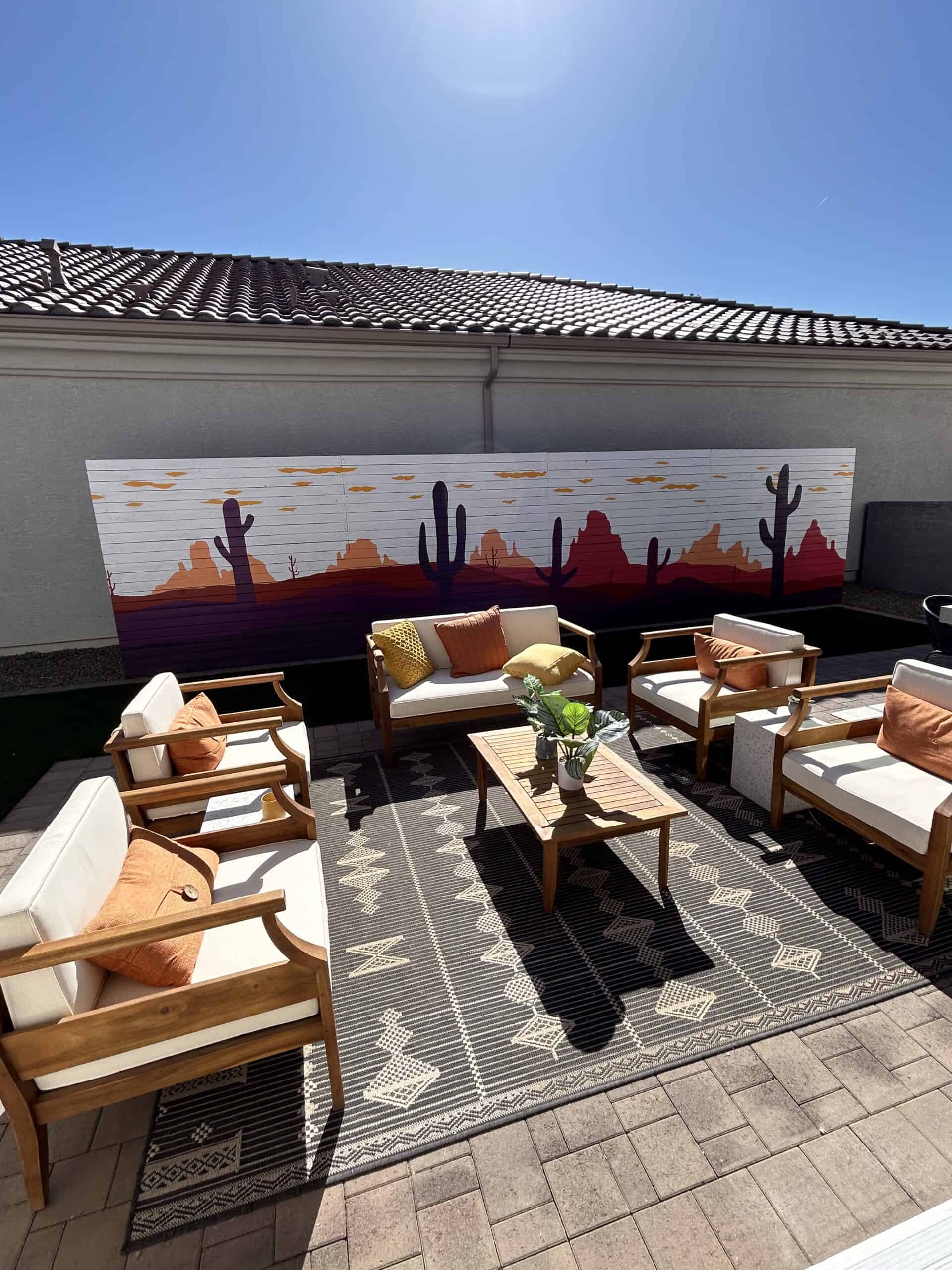
If you are comparing pavers vs concrete Arizona projects, the real question usually is not just price. It is how the surface will hold up after years of brutal sun, triple-digit afternoons, monsoon storms, dust, irrigation overspray, and subtle soil movement that never seems dramatic until a patio cracks or a driveway starts looking tired.
In Arizona, outdoor surfaces live a harder life than they do in milder climates. A material that performs well in another state can struggle here once it faces expanding heat, shifting soil, and sudden moisture. That is why many Arizona homeowners end up weighing pavers against concrete for patios, pool decks, walkways, and driveways with a different set of priorities: durability, repair costs, appearance over time, and whether the surface still adds curb appeal five or ten years down the road.
The short answer is this: pavers often last longer and age better in Arizona conditions, especially when installed correctly. But that does not mean concrete is always the wrong choice. The better option depends on where the surface is going, how much traffic it will take, what look you want, and how much maintenance you are willing to accept.
Why Arizona is harder on outdoor surfaces
Arizona's heat is not just uncomfortable for people. It is punishing on materials. Long periods of sun exposure can bake a surface day after day, then temperatures drop overnight. That repeated expansion and contraction slowly takes a toll, especially on large concrete slabs.
Then there is the ground underneath. In parts of the East Valley, shifting soil, clay heavy soils, and uneven moisture can create gradual movement below the surface. Add monsoon storms, monsoon rains, and occasional pooling water, and you get a recipe for settlement, cracks, and joint separation. Even though Arizona does not deal with the same freeze thaw cycles seen in colder regions, the desert climate creates its own version of stress.
For homeowners in Gilbert, Chandler, Mesa, Queen Creek, Tempe, and San Tan Valley, the right material is the one that can handle both the weather above and the ground below.
How poured concrete performs in the desert climate
Poured concrete is common for a reason. It is familiar, relatively fast to install, and often comes with a lower upfront cost per square foot than premium pavers. A standard concrete patio or driveway can look clean and simple when it is first poured.
But concrete is one continuous slab. That matters. When a large slab expands in the heat or reacts to soil movement underneath, stress has to go somewhere. That is why control joints and expansion joints are cut into concrete slabs. They are meant to guide where cracks happen. In theory, they help manage movement. In practice, they do not guarantee a crack-free surface.
A concrete patio in Arizona can perform adequately for years, especially if the base prep is strong, drainage is handled correctly, and the slab is properly reinforced. Still, concrete tends to show age in a more obvious way. Hairline cracks can spread. Control joints can become visually distracting. Joint separation can widen. Surface discoloration can show up from sun, water, or mineral deposits.
Many homeowners choose stamped concrete because it offers more visual appeal than plain gray slab work. Stamped concrete can mimic stone, brick, or tile patterns at a lower initial cost than natural stone or paver patios. But stamped concrete is still concrete. Once it cracks, the decorative finish cracks too. Repairs on stamped concrete are rarely invisible, and color matching later can be frustrating.
Why pavers tend to last longer in Arizona
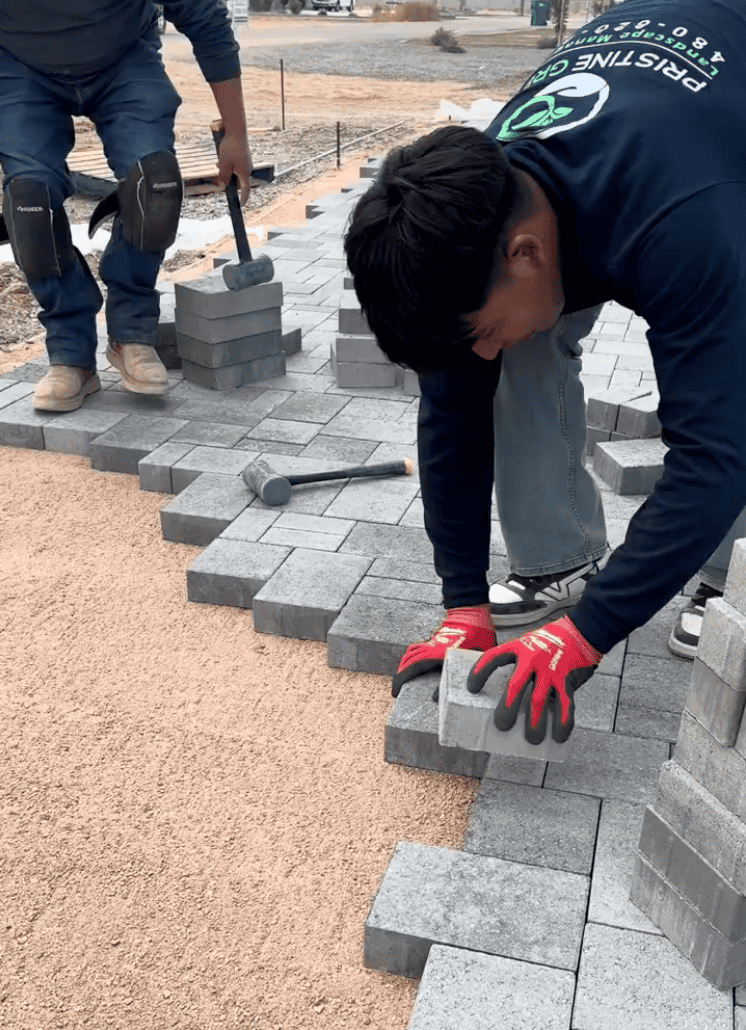
Pavers work differently. Instead of one whole surface, you have individual units set over a prepared base of compacted aggregate and sand, with polymeric sand or joint sand between them. That modular system is one of the biggest reasons pavers often outperform poured concrete in Arizona.
When the ground shifts slightly, individual pavers can move with it. That flexibility matters in areas with soil movement and ground shifts. Instead of a long visible crack racing across a slab, you may only see a low spot, a lifted edge, or a few individual units that need adjustment.
This is where pavers offer a practical advantage. If one area settles, a crew can often lift the affected section, regrade the base, and reinstall the same materials. You do not usually need full replacement. You do not have to demolish the whole surface. And if one unit gets stained or chipped, it is possible to replace individual pavers rather than tearing out an entire patio or driveway.
That repairability is a major reason pavers are considered a lasting investment in Arizona projects. They are designed as a system that can be serviced instead of a slab that often has to be patched, resurfaced, or replaced once deterioration becomes obvious.
Pavers vs concrete for a concrete patio or paver patio
For backyard living areas, the debate usually starts with the patio. A concrete patio can be a cost effective solution if your goal is a basic entertaining area and budget is the main driver. A plain slab can support furniture, grills, and foot traffic just fine.
The issue is what happens over time. In full sun, a concrete patio can become brutally hot. Surface cracks can interrupt the clean look. If the slab settles near the house or yard edge, drainage can become a problem. And if you later want to expand the space, matching old and new concrete is not always easy.
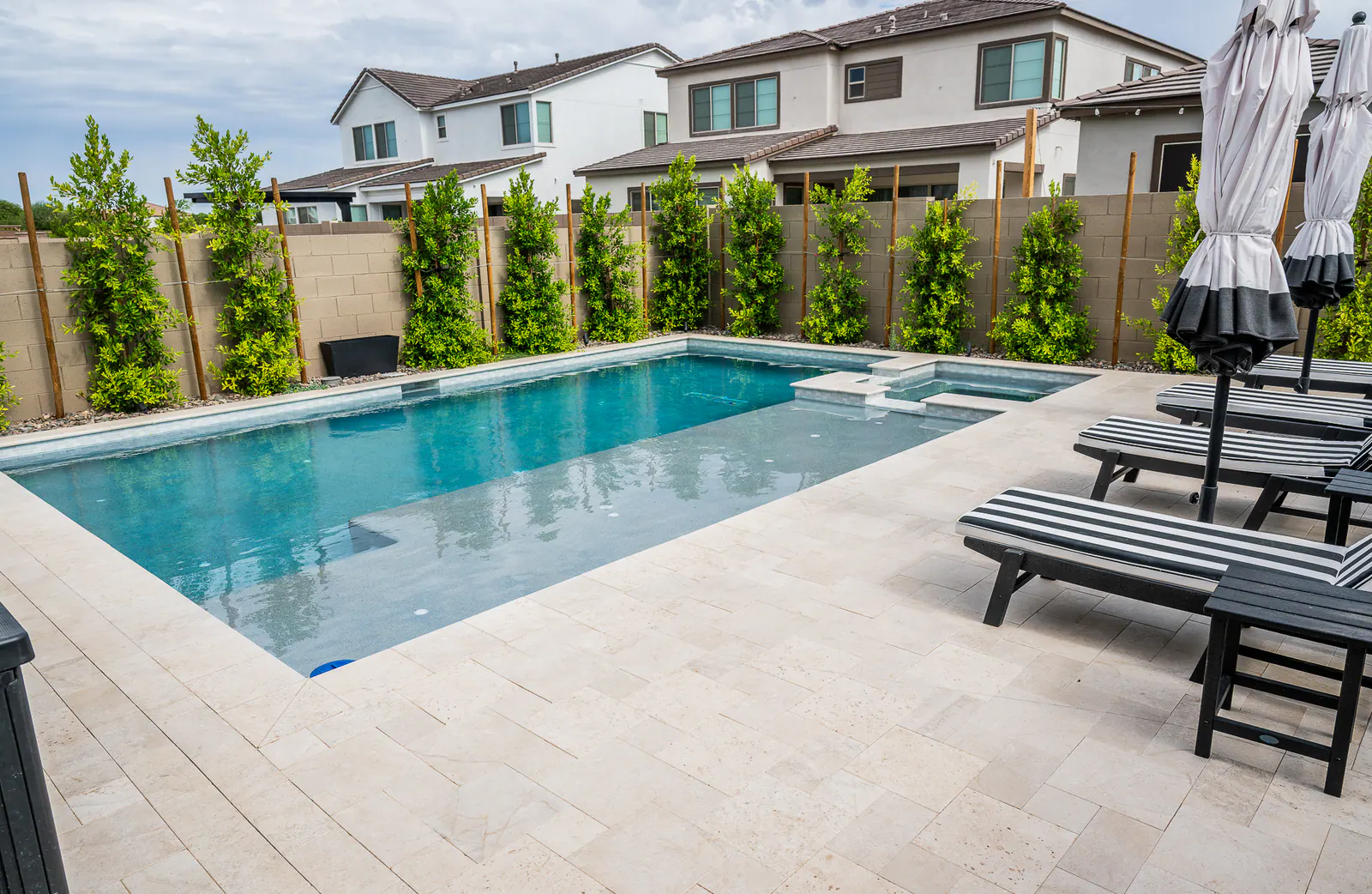
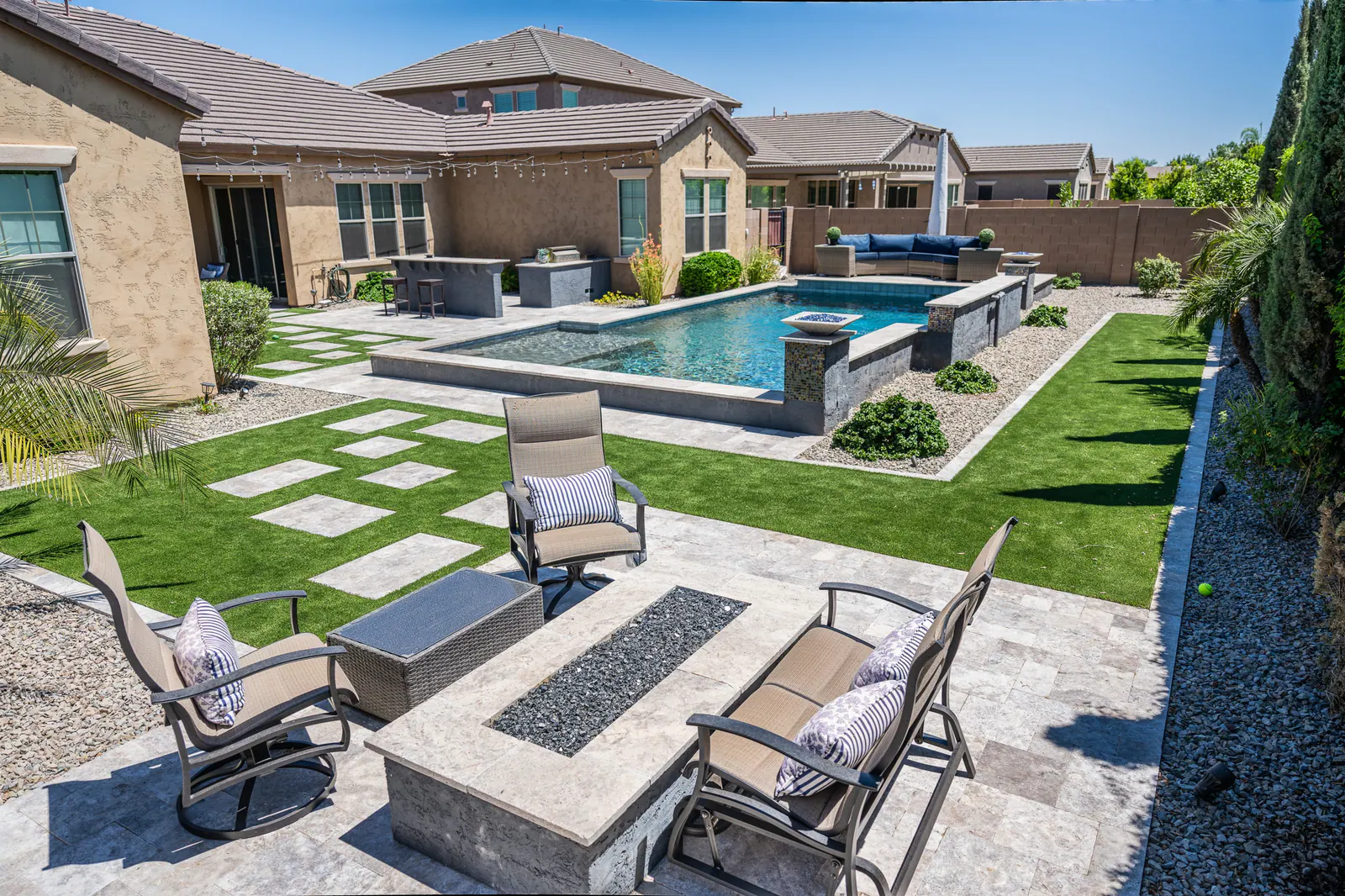
Paver patios give homeowners more design possibilities from day one. You can choose patterns, borders, color blends, and textures that fit a modern desert home or a more traditional look. Pavers also pair naturally with artificial turf, gravel, lighting, fire pits, and planting beds. That makes them especially useful in Arizona backyard renovations where the patio is only one part of a larger design.
Many paver patios are also cooler underfoot than darker concrete finishes, especially when lighter tones are selected. That does not mean they stay cold in July, but in practical day-to-day use, they can feel more comfortable than some concrete patio surfaces.
If you are planning a larger outdoor upgrade, it helps to think beyond the slab itself and look at how hardscape choices affect maintenance, water use, and long-term livability. For related ideas, Pristine Green also shares guidance on creating a low-maintenance landscape that works with Arizona conditions.
Driveway pavers vs concrete for Arizona driveways
The driveway is where durability gets tested harder. Cars add weight, turning tires create pressure, and oil stains tend to show up eventually. For Arizona driveways, the difference between pavers and concrete becomes even more visible over time.
A poured concrete driveway can absolutely work, but once cracks start or one section settles, repair becomes more complicated. Patching often leaves a mismatched look. Resurfacing can buy time, but it does not always solve the root issue if the ground underneath is unstable. In some cases, homeowners end up needing full replacement of a large slab just to correct one problem area.
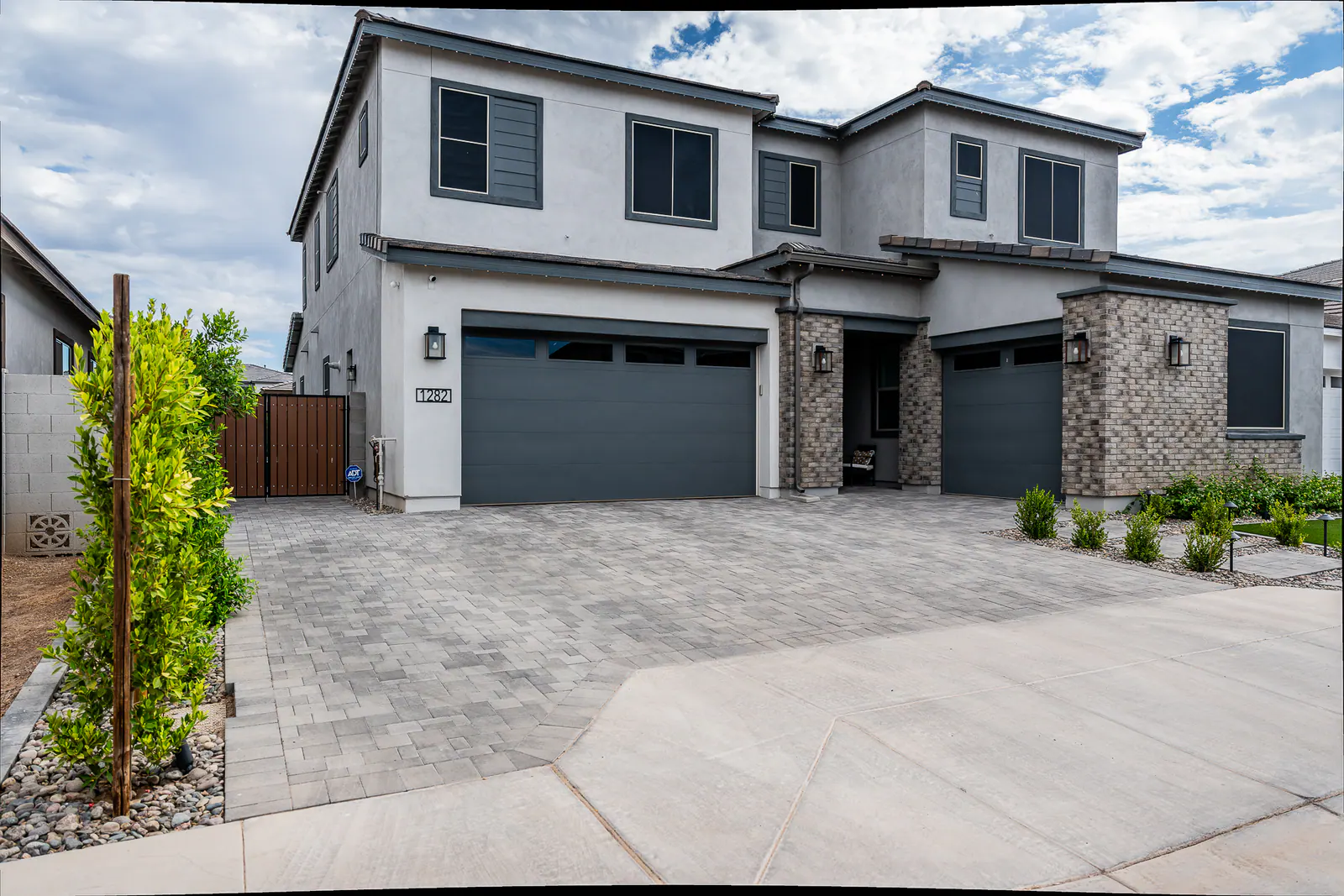
Driveway pavers are built for load distribution across many individual units. High-quality pavers typically have strong compressive strength, and a well-prepared base helps support vehicle traffic without relying on one continuous slab. If settlement occurs, repair is usually more targeted. Crews can remove the affected section, correct the base, and reinstall the pavers.
That is one reason driveway pavers are so appealing to homeowners seeking both durability and curb appeal. They create a more custom look than standard concrete, they hold their visual appeal well, and they allow for easier repair without replacing the entire driveway surface.
For homeowners considering this type of upgrade locally, Pristine Green offers custom paver installation in Gilbert for driveways, patios, and outdoor living spaces.
What about stamped concrete?
Stamped concrete often enters the conversation as the middle ground. It tries to deliver the look of stone or pavers without the higher initial cost of installing individual pavers. On paper, that sounds appealing.
But in Arizona, stamped concrete still carries the vulnerabilities of poured concrete. It can crack due to shifting soil, heat stress, or poor drainage. It requires sealing to help preserve color and surface performance. And when repairs are needed, they can be difficult to hide because the pattern and color must be matched across a damaged slab.
Stamped concrete can look impressive right after installation. The challenge is preserving that look once the sun fades the color, the surface wears, or cracks interrupt the pattern. For homeowners who prioritize lasting beauty over the lowest first-year price, pavers usually age more gracefully.
Maintenance and concrete repairs over time
No outdoor surface is maintenance-free. The better question is what kind of maintenance you are signing up for.
Concrete maintenance often includes sealing, cleaning, monitoring cracks, and possibly resurfacing if the slab begins to wear or discolor. When cracks appear, concrete repairs may involve patching, caulking joints, grinding uneven sections, or replacing part of the slab. Those repairs are sometimes functional but rarely seamless.
Pavers need maintenance too. Joint sand may need refreshing. Polymeric sand can degrade over time in exposed areas. Weeds can appear if edges are neglected. A few pavers may need resetting if the base settles. But the maintenance is usually more surgical. You service the area that needs attention instead of dealing with the whole surface.
That distinction matters. Ongoing maintenance for pavers is often less dramatic because the system is modular. Ongoing maintenance for concrete can become more expensive once cracks spread, slabs settle, or staining becomes permanent.
Which surface handles soil movement better?
This is one of the biggest factors in Arizona and one of the most overlooked. Surface materials do not fail only because of weather. They often fail because the ground underneath moves.
Concrete slabs are rigid. If the ground settles unevenly, the slab may crack, tilt, or separate along control joints. You can reinforce concrete, improve base prep, and add expansion joints, but the slab itself still behaves as one large piece.
Pavers are more forgiving. Because they are individual units laid over a flexible base, they can better accommodate minor soil movement and shifting soil without obvious structural failure. That does not mean pavers are immune to poor installation. If the base is rushed or drainage is ignored, pavers can settle unevenly too. But when that happens, the repair path is usually simpler and less costly than replacing cracked concrete slabs.
In a region where monsoon storms can saturate the ground fast and irrigation leaks can quietly soften base material over time, flexibility is a real advantage.
Cost upfront vs cost over the life of the surface
Concrete usually wins the upfront price comparison. For many homeowners, that matters. A poured concrete patio or driveway often costs less initially than professional paver installation, especially if you are comparing plain concrete to premium stone-style pavers.
But first cost is only part of the story. Over the life of the surface, repair costs, resurfacing, sealing, and eventual replacement can narrow the gap. If a concrete slab cracks badly or settles in a visible area, the cheaper option at the start may become the more expensive one later.
Pavers cost more to install pavers correctly because the process is labor-intensive. Excavation, compaction, base preparation, bedding sand, edge restraints, and finishing all matter. But that higher initial cost often buys better durability, easier repair, stronger curb appeal, and more design options.
For many Arizona homeowners, the smarter question is not “Which costs less today?” but “Which gives me fewer headaches over ten years?”
Which looks better and adds more property value?
Appearance is subjective, but there is a reason many homeowners prefer pavers for visible front-yard and backyard hardscape. Pavers create texture, pattern, and dimension in a way standard concrete usually does not. Even when concrete is stamped, it still tends to read as one broad surface.
Pavers offer more flexibility in patterns, borders, tone variation, and layout. They can complement desert plants, modern architecture, pool decks, and outdoor kitchens without looking flat. That added visual appeal often translates into stronger curb appeal and a more finished look overall.
In practical terms, that can help increase property value. Buyers notice a driveway, patio, and entry sequence right away. A cracked slab suggests future repair. A well-designed paver installation suggests care, quality, and durability. While no material guarantees resale return, pavers tend to support the kind of polished outdoor presentation that helps increase property interest.
Homeowners who want inspiration for layout and style can also explore these paver design ideas in Queen Creek, especially if they are comparing pattern choices and hardscape looks.
When concrete still makes sense
Concrete is not a bad material. It is simply less forgiving in Arizona when compared with pavers.
A concrete patio may still make sense if you need a simple, functional slab in a lower-visibility area, have a tighter budget, and understand the possibility of future cracks or resurfacing. Standard concrete can also be appropriate for utility spaces where design is less important than basic function.
Stamped concrete can make sense for homeowners who want decorative finish at a lower initial price and are comfortable with the tradeoffs. Just go into it knowing that stamped concrete is not the same as natural stone or pavers in long-term serviceability.
The key is realistic expectations. Concrete can work. It just usually does not age as gracefully in Arizona's heat as pavers do.
When pavers are the better long-term choice
Pavers are usually the better fit when homeowners want a durable patio, a more resilient driveway, better curb appeal, easier repair, and a surface that can adapt to minor ground movement. They are especially strong for Arizona driveways, paver patios, pool decks, and walkways where appearance and longevity both matter.
They also make sense for homeowners seeking a more custom outdoor design. Because pavers come in so many materials, colors, shapes, and stone-inspired finishes, they fit a wider range of homes and landscapes. Whether the goal is a modern backyard, a classic driveway, or a resort-style patio, pavers usually provide more control over the finished look.
Most homeowners who plan to stay in their home for years find that pavers feel less like a quick fix and more like a lasting investment.
Final verdict: which lasts longer in Arizona heat?
If the question is purely which lasts longer, pavers usually have the edge in Arizona. They handle soil movement better, resist the all-or-nothing failure pattern of concrete slabs, allow simpler repair, and maintain their appearance longer with proper installation and maintenance.
Concrete can still serve a purpose, and for some projects it remains a cost effective solution. But if you are comparing long-term durability, repair flexibility, visual appeal, and how the surface responds to Arizona heat and monsoon conditions, pavers come out ahead more often than not.
For many Arizona homeowners, that makes the decision less about trend and more about common sense. In a climate this demanding, the best surface is the one that does not punish you later for saving a little at the start.
If you are weighing materials for a patio, pool deck, or driveway and want project-specific guidance, Pristine Green offers a free consultation to help homeowners choose the right material, layout, and finish for their space. A good decision starts with the conditions on your property, not a one-size-fits-all answer.
Planning a patio, pool deck, or driveway?
Get project-specific guidance on the material, layout, and finish that will work best for your Arizona property.
Schedule a Free Consultation