
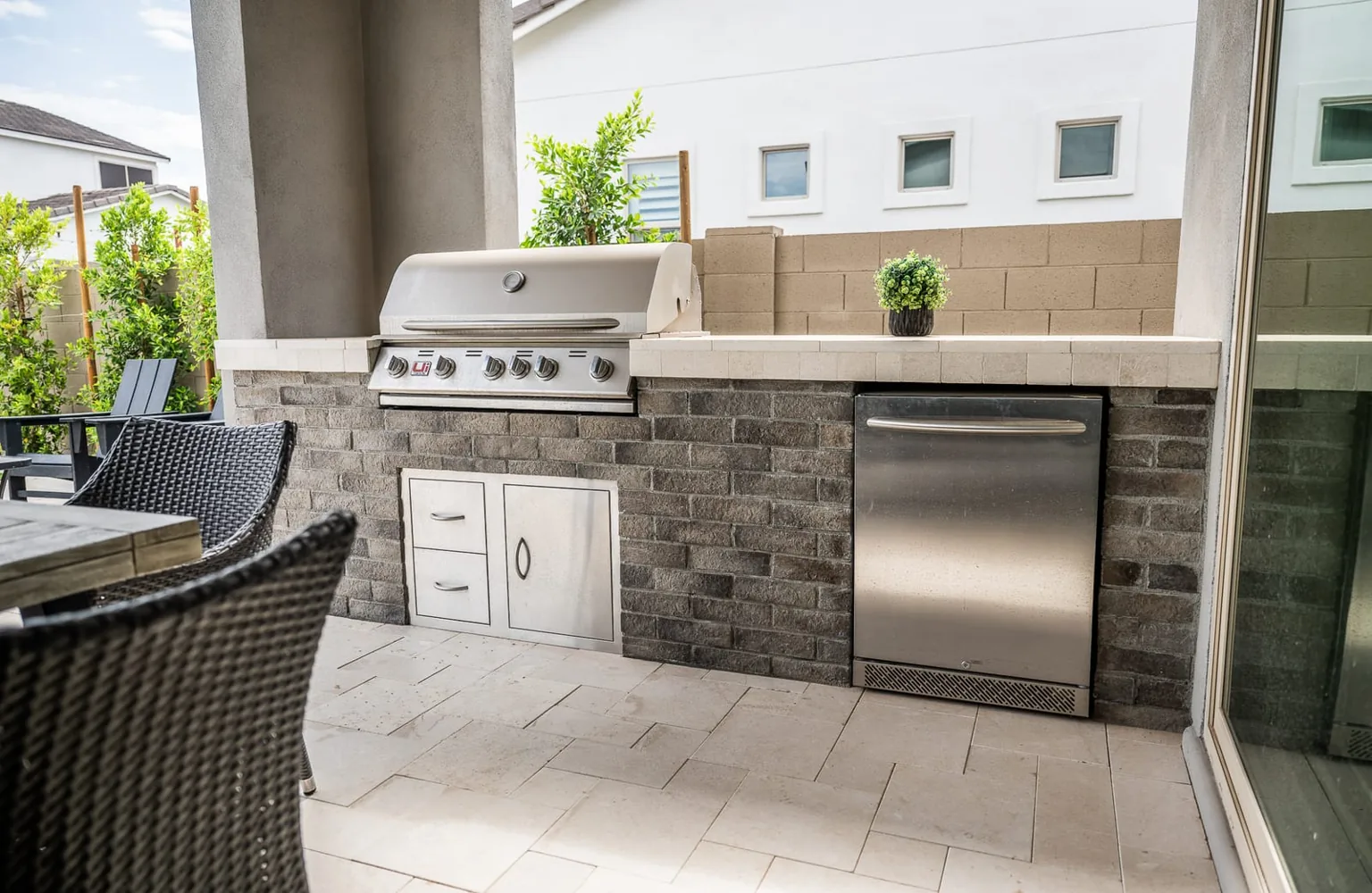
At a Glance
- Choose outdoor-rated appliances, suitable countertops, and a base designed for the equipment it supports.
- Plan shade and afternoon sun protection alongside the grill's ventilation and clearance requirements.
- Compare paving samples in sun and shade; light-colored surfaces can still become hot.
- Follow product-specific cleaning, sealing, and maintenance instructions rather than a single schedule for every material.
An Arizona backyard can be a welcoming place to cook and gather, but direct summer sun puts outdoor kitchens to the test. Countertops and metal handles heat up, appliances face demanding conditions, and exposed finishes need to cope with sunlight, dust, and rain.
An outdoor kitchen can suit the desert climate when materials, placement, ventilation, and maintenance are considered together. For homeowners planning an outdoor kitchen in Gilbert or elsewhere in the East Valley, those decisions belong at the beginning of the design process.
Understanding the Impact of Desert Heat on Outdoor Structures
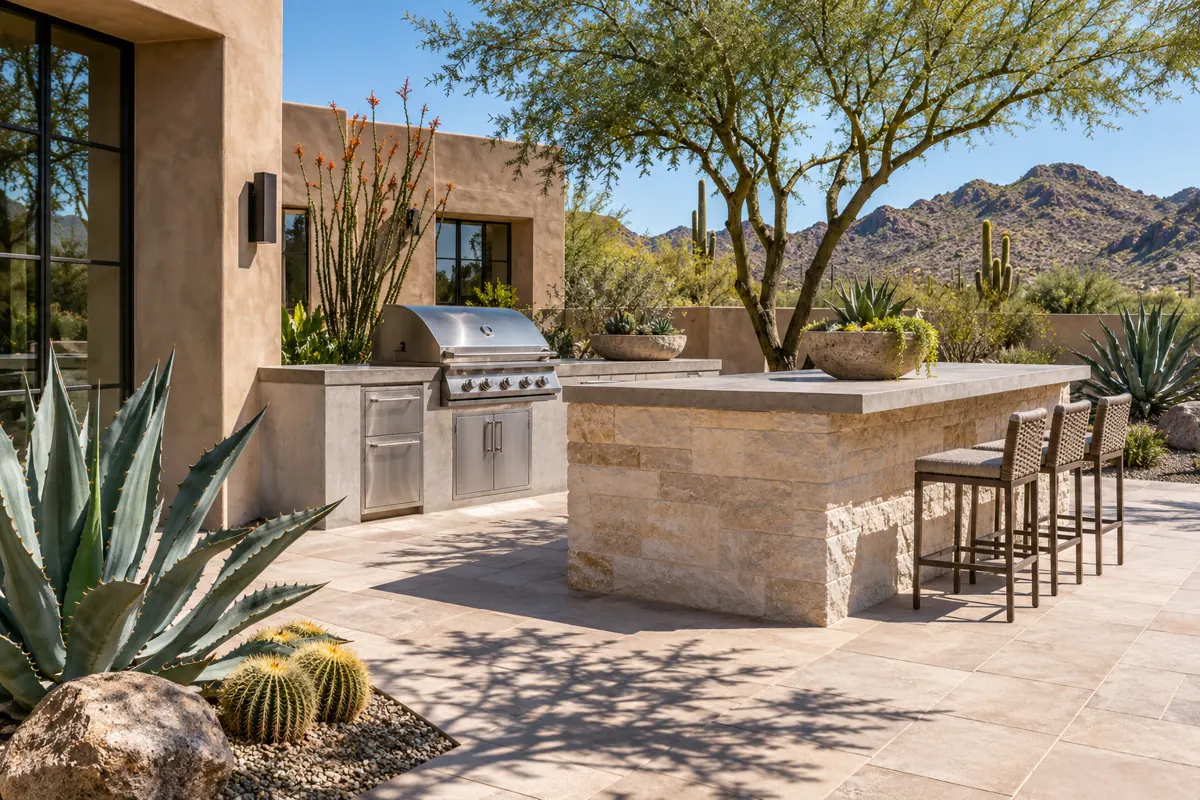
A kitchen island must handle more than the heat from the grill. Sun exposure, temperature changes, blowing dust, and stormwater all affect how the space performs.
Managing Surface Heat and Daily Temperature Changes
Sunlit surfaces can become much hotter than the surrounding air. Materials also expand and contract as temperatures change. A suitable foundation, compatible setting materials, and correctly detailed joints help accommodate that movement. Shade can make work areas more comfortable, but check handles and counters before touching them on hot days.
Protecting Against UV Exposure
Choose finishes, sealants, cabinetry, and accessories specifically approved for outdoor exposure. Sunlight can fade or damage materials that were designed for indoor use. Ask the supplier how the selected finish should be cleaned and what its warranty covers in an exposed installation.
Planning for Monsoons, Dust, and Drainage
Plan drainage so water does not collect against the island or around electrical equipment. Secure components appropriately and keep service panels accessible. Materials do not all need to be nonporous; the assembly needs suitable weather protection, drainage, and maintenance for the products used.
Choosing Materials for a Heat-Resistant Outdoor Kitchen
Start with the appliances you want to use, then design the structure and finishes around their installation requirements. A material's appearance alone does not tell you whether it is suitable beside a grill or exposed to the weather.
Framing and Base Construction
Concrete masonry and appropriately specified metal framing are options for outdoor kitchen bases. The structure must support the countertop and appliances, with details suited to the site and equipment. Combustible construction requires particular care: follow the appliance manual for permitted materials, required clearances, and any approved insulating jacket.
Countertops: Granite, Concrete, and Outdoor-Rated Alternatives
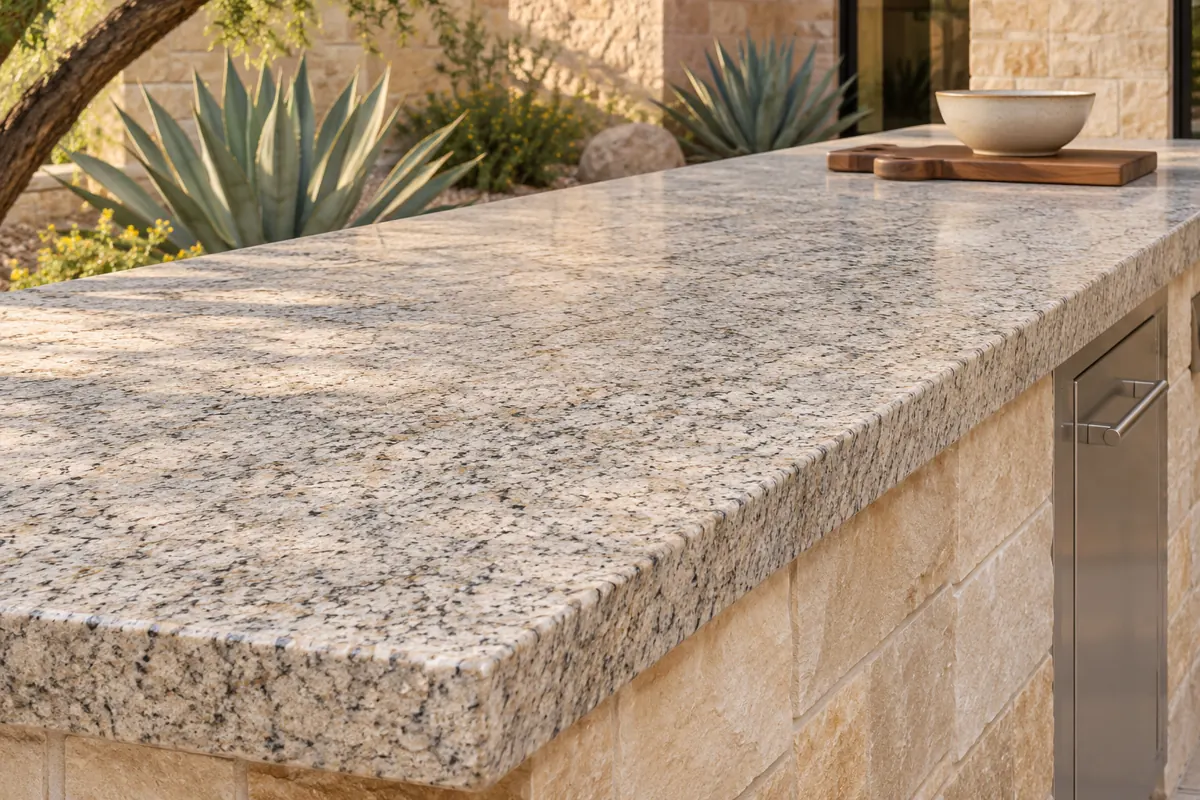
Granite, properly detailed concrete, and selected outdoor-rated porcelain or sintered surfaces may be worth comparing. Confirm that the specific slab, finish, adhesive, and installation system are approved for the exposure. Ask about countertop support, joints, staining, and care before choosing a material.
Lighter colors can absorb less solar energy than darker alternatives, but any unshaded countertop may become hot. Use trivets for hot cookware and follow the fabricator's instructions. The Natural Stone Institute notes that some natural stone countertops do not require sealing, so the stone itself should guide the care plan.
Appliances and Cabinetry: Understanding Stainless Steel Grades
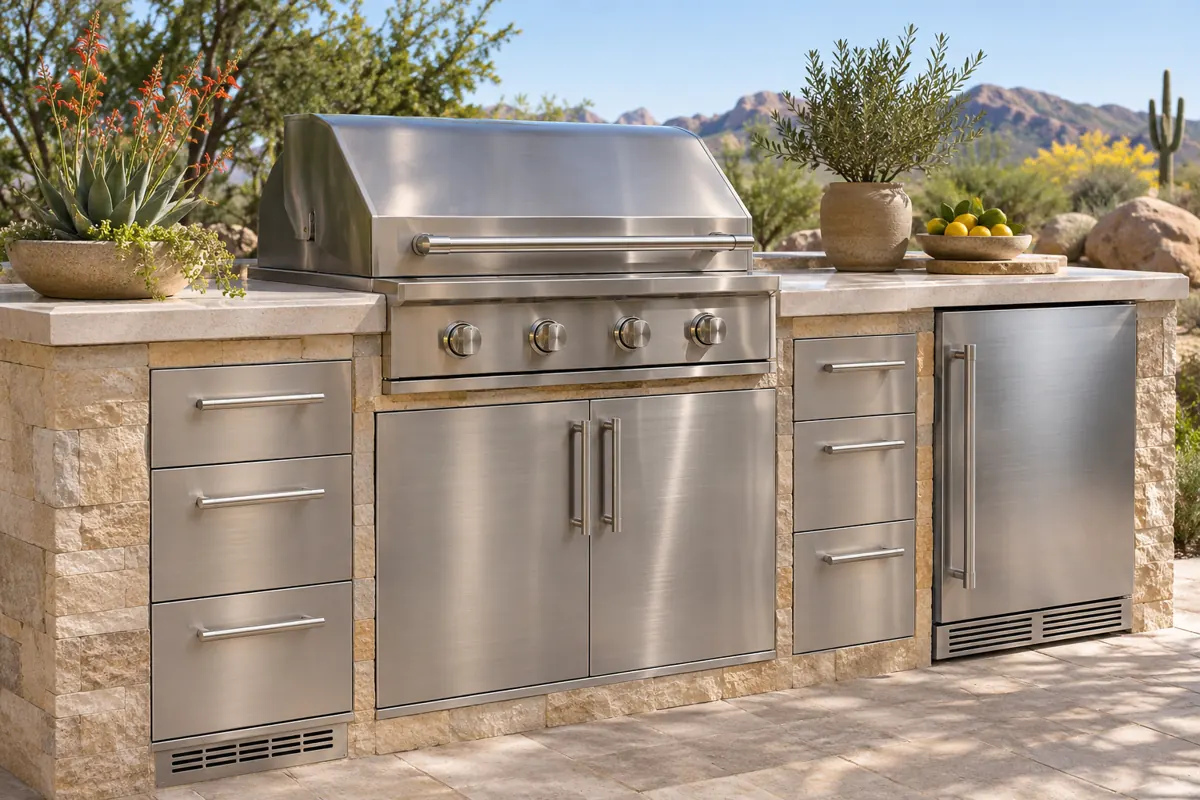
304 stainless steel is used in many outdoor kitchen products. Grade 316 offers greater resistance to chloride-related corrosion and may be worth considering near a saltwater pool. The British Stainless Steel Association explains the corrosion differences between these grades. Neither is immune to corrosion, and grade alone does not establish the quality or suitability of an appliance.
Choose appliances rated for outdoor use and check their operating limits, ventilation needs, and warranty conditions. A refrigerator may be outdoor-rated yet still have a maximum ambient operating temperature. Keep its specified air openings clear and allow access for maintenance.
Design and Layout Tips for Desert Kitchens
Walk through the proposed kitchen location in the afternoon. Notice where sunlight reaches the prep counter, where people will stand to cook, and how guests will move between the patio and the house.
Plan Overhead Shade With Grill Requirements in Mind
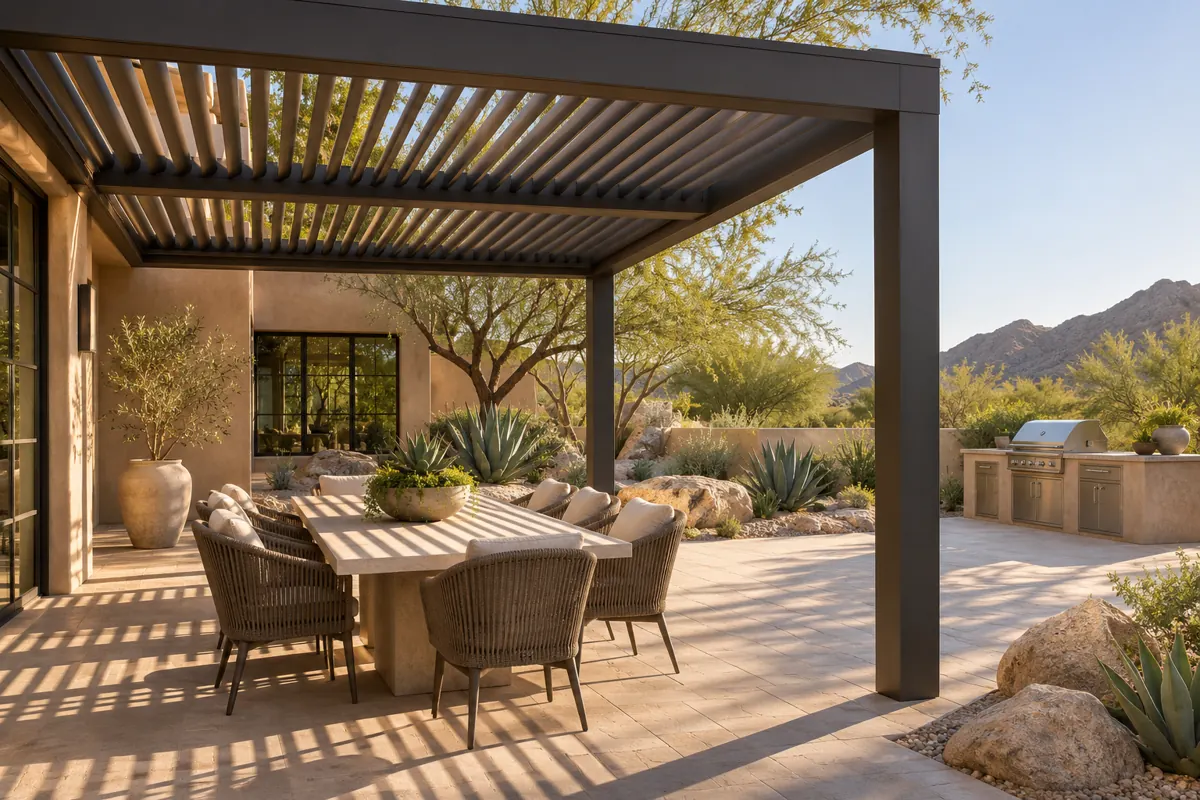
A patio cover, ramada, or pergola can shade prep and seating areas, but a grill cannot automatically be placed beneath one. Requirements vary by appliance. Wolf's outdoor grill guidance, for example, restricts overhead combustible construction. Have the selected grill's manual reviewed before finalizing a cover, hood, or enclosure.
Preserve the ventilation and clearances required by the manufacturer. Shade for the dining area can be planned separately from the cooking equipment when that better suits the appliance and site.
Improve Appliance Placement and Orientation
Where practical, protect prep areas and refrigeration from direct afternoon sun. Consider prevailing wind and smoke movement while preserving required appliance clearances. Leave room to open lids and doors, reach shutoffs, and service equipment without dismantling the island.
Choose Surrounding Hardscaping Carefully
Compare paving for heat, glare, traction, drainage, and maintenance. The EPA explains that pavement reflectance affects how much solar energy a surface absorbs. A lighter finish may help reduce surface heating, but it does not guarantee a cool walking surface or cooler air around the kitchen.
Review material samples outdoors and plan shade where people will gather. Coordinating local hardscaping services with the kitchen layout helps connect the cooking area, walkways, seating, and drainage.
Maintenance Practices for Arizona Outdoor Kitchens
A practical care routine starts with the manuals and care sheets supplied with your kitchen. Keep them together so each surface and appliance receives the right treatment.
- Clean dust and spills after surfaces have cooled, using products approved for the finish.
- Keep appliance vents and accessible drainage paths free of debris; arrange servicing as directed by the manufacturer.
- Use compatible sealers only where recommended, with inspection and reapplication based on the material and product instructions.
- Cover appliances only after they have cooled, using covers suited to the equipment and conditions.
- Check joints, finishes, and accessible components after storms, and have damage assessed before continued use.
Sealing can help certain materials resist staining or moisture, but it does not prevent every crack or make a countertop heatproof. Set inspection and resealing intervals with your fabricator based on the material, sealer, and exposure.
Planning Your Backyard With Pristine Green LLC
Pristine Green LLC designs and builds outdoor living areas in the East Valley. Bring your appliance ideas, preferred materials, and photos of your yard to the planning conversation. Discuss sun exposure, seating, utilities, and access together so the kitchen fits the way you want to use your backyard.
Before construction, confirm the approvals and permits that apply to your property and project. Gas, electrical, and plumbing work should be planned with qualified professionals. Use the form below to discuss your outdoor kitchen and surrounding landscape.
Frequently Asked Questions
What maintenance is recommended to keep outdoor kitchen features protected from heat?
Follow each product's care instructions, clean cooled surfaces regularly, and keep appliance ventilation paths clear. Use suitable covers after appliances have cooled. Ask the fabricator whether your stone or masonry needs sealing and how to determine when reapplication is due.
How do landscaping and hardscaping services help reduce heat around an outdoor kitchen?
A coordinated design can provide shade for prep and seating areas, limit direct afternoon sun, and compare paving materials for surface heating and glare. Results depend on the site, weather, materials, and shade coverage. Grill clearances and ventilation requirements still apply.
Why choose Pristine Green LLC for an outdoor kitchen in Arizona?
Pristine Green LLC offers outdoor kitchen and hardscape design and installation in the East Valley. Discuss your yard's sun exposure, appliance choices, patio layout, and material preferences with the team to plan the cooking area alongside the rest of your outdoor space.