
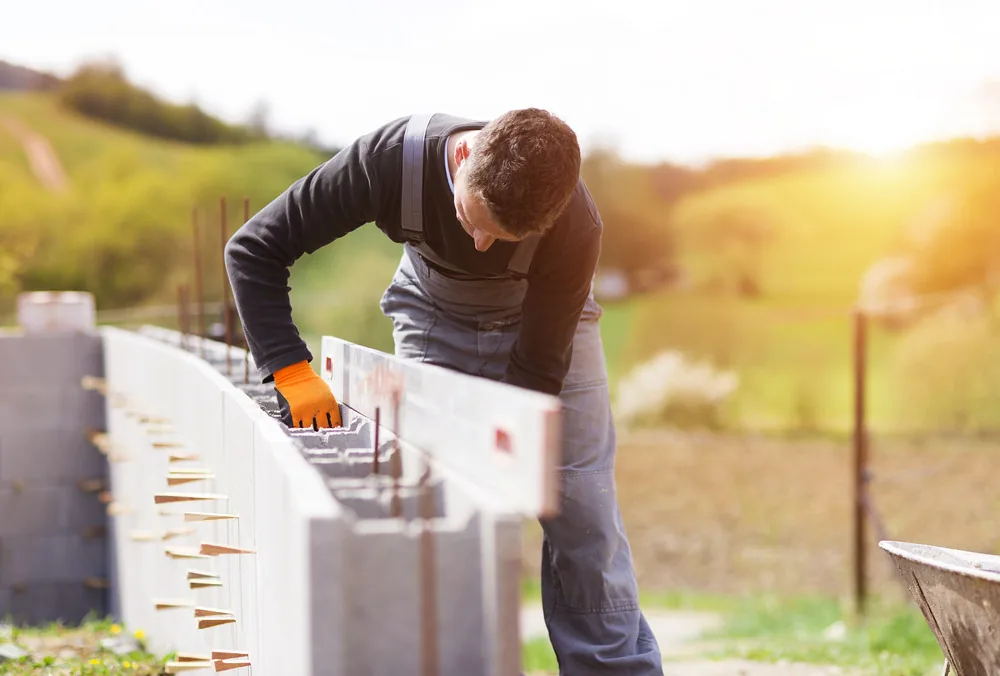
Homeowners tend to reach for plants when a yard feels unfinished. More color, another shrub, fresh mulch. The results are usually incremental, and the yard often ends up looking busier without looking better.
Hardscape works differently. Hard surfaces create the structure everything else sits within, which means changes to edging, walkways, seating areas, and shade features register immediately and read as intentional. They also hold their appearance year-round rather than fluctuating with the season.
Demand reflects that. According to Arizton, the U.S. hardscaping products market was valued at approximately $4.9 billion in 2025 and is projected to reach $6.5 billion by 2031, driven by demand for outdoor living spaces, residential remodeling, and landscape improvements. The improvements below are the ones a hardscape contractor sees produce disproportionate results relative to their scale.
Defining Edges Between Beds and Lawn
The highest return improvement is also the smallest. A crisp, continuous edge between planting beds and turf makes both look deliberate, while a soft or ragged edge makes even well-maintained plantings read as neglected.
Steel and aluminum edging holds a clean line for years and suits properties where beds meet walkways or driveways. Stone or paver borders add visual weight and work well where a bed needs more presence. Spade-cut trenching costs the least and reads sharp from the street, though it requires recutting each season.
Shape matters as much as material. Long, sweeping curves look considered, while tight scallops and wandering lines look accidental. Bed proportion matters too. Widening a narrow foundation bed by two feet frequently transforms a facade more than anything planted inside it.
This is often where a hardscape contractor starts a project, because correcting edges and bed geometry establishes the framework every later decision works within.
Improving Walkways and Approach
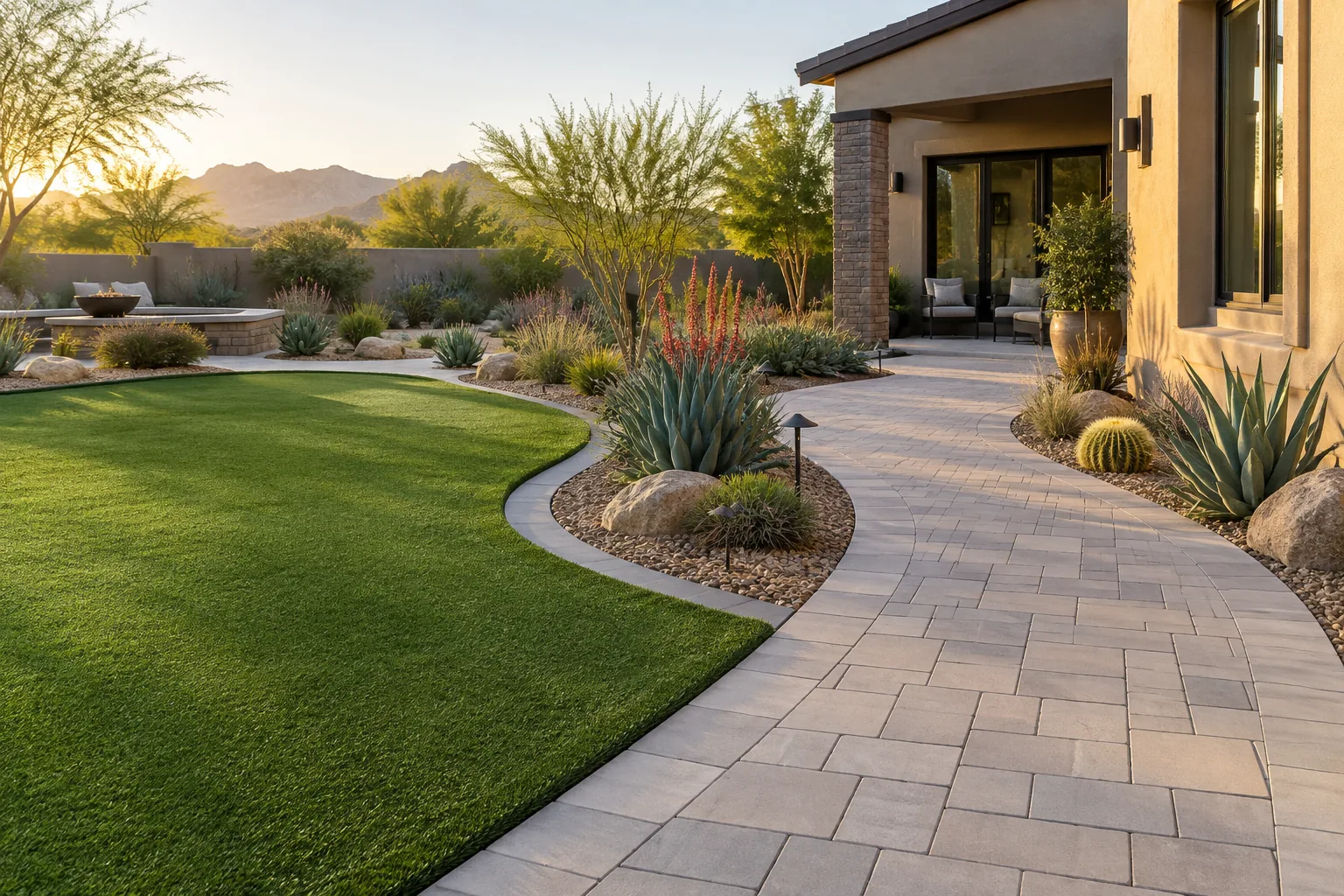
The path to a front door shapes a visitor's first impression more than any other single element, and most residential walkways are undersized.
A standard three-foot path forces two people to walk single file. Widening to four or five feet allows people to walk side by side and immediately changes how generous the entry feels. Adding a landing at the door creates a place to stand rather than a place to stop.
Material selection sets the tone. Pavers offer pattern flexibility and can be lifted individually for repairs. Flagstone reads natural and suits desert plantings well. Poured concrete with a decorative finish provides a clean contemporary look at lower cost.
Matching material to the architecture matters more than matching it to a catalog. A walkway that echoes the home's stone, stucco color, or roofline reads as original to the property rather than added later.
What Materials Work Best in the Arizona Heat?
Surface temperature is not a minor consideration in this climate. It determines whether a patio is usable in the afternoon or purely decorative for half the year.
According to the U.S. Environmental Protection Agency, a pilot study in Arizona found that conventional paving materials such as asphalt can reach surface temperatures up to 152°F at mid-day, while the surface temperature of cool pavements remained 10 to 16°F cooler.
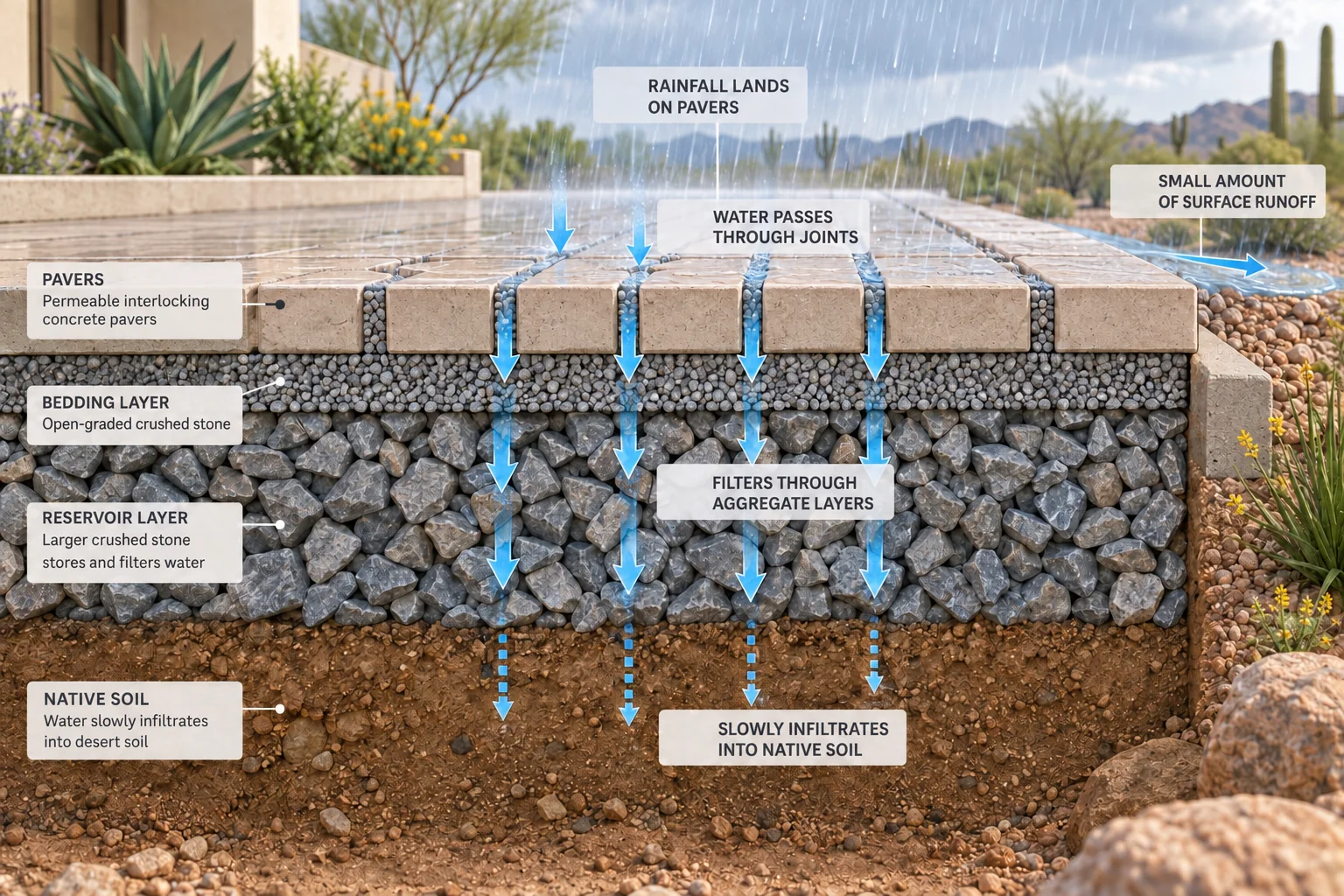
That difference is meaningful for anyone walking barefoot from a pool, letting a dog cross a patio, or hoping to use an outdoor space before evening. Lighter-colored pavers, concrete with reflective finishes, and permeable materials all run cooler than dark surfaces absorbing full sun.
An experienced hardscape contractor factors orientation into this as well. West-facing surfaces take the worst afternoon exposure and benefit most from lighter materials or shade.
Adding Seating Walls and Defined Gathering Areas
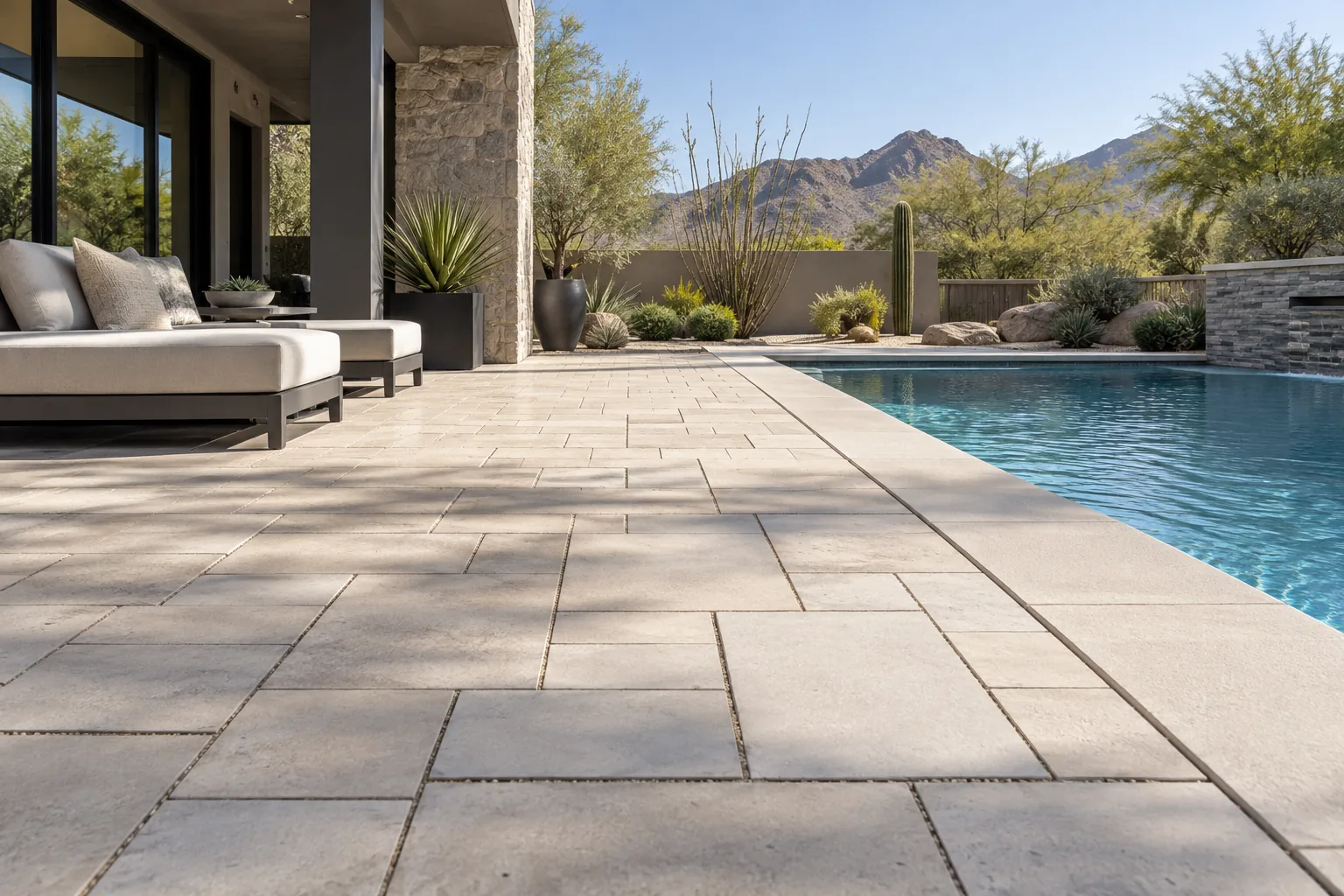
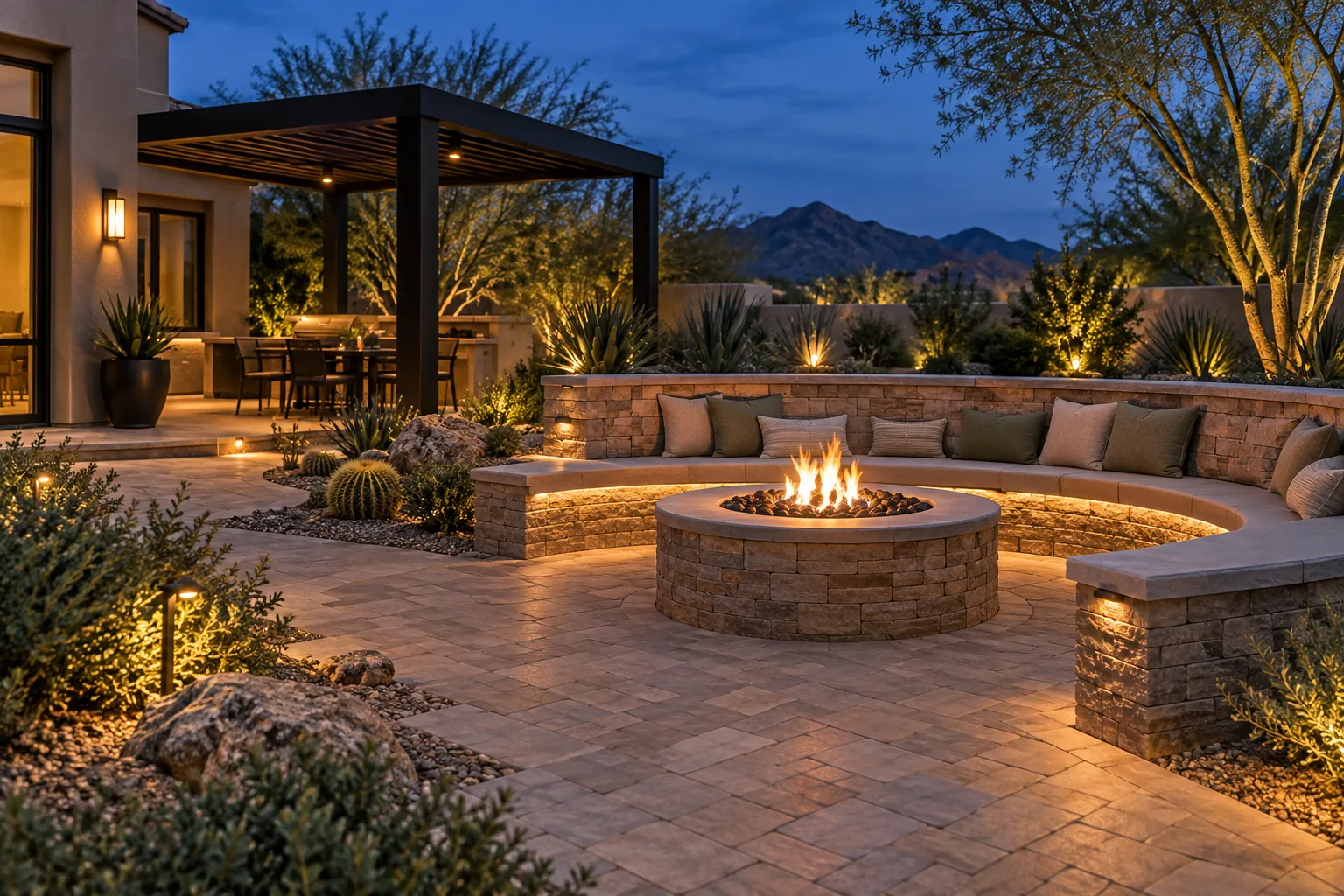
Low seating walls solve several problems simultaneously. They provide permanent seating that requires no storage or maintenance, define the boundary of a patio without closing it in, and create a visual anchor in an otherwise open space.
At roughly 18 inches high, a seating wall works as informal seating while doubling as a retaining element where grade changes. Matching the wall material to an existing patio or the home's exterior ties the composition together.
Defining a gathering area at all is often the missing piece in a backyard. An open expanse of gravel or turf gives people nowhere obvious to sit. A defined paved area with a clear boundary tells everyone where the space is meant to be used.
Extending Usable Hours With Fire Features and Shade
Two additions extend outdoor living in opposite directions.
Shade structures make afternoons possible. Pergolas, ramadas, and shade sails reduce direct sun exposure over a patio, and the temperature difference under proper shade is substantial. Placement should account for the sun's path rather than only for what looks balanced on a plan.
Fire features make evenings comfortable during the cooler months, and Arizona has a long season for them. A built-in fire pit anchors a seating area and gives a backyard a natural focal point. Gas units offer convenience and cleaner operation, while wood-burning versions provide a different experience. Local codes and any HOA restrictions should be confirmed before installation.
Landscape lighting completes the picture, since an unlit hardscape effectively disappears after sunset. Path lighting defines circulation, and uplighting on a wall or specimen plant creates a focal point after dark.
Improve Your Property With Purposeful Hardscape
Hardscape improvements deliver disproportionate impact because they create the structure a landscape reads against. Defined edges, a properly scaled walkway, heat-appropriate materials, a real gathering area, and shade or lighting each change how a property looks and how much of it actually gets used.
Pristine Green LLC handles the full sequence, from design and material selection through installation, with attention to how surfaces perform in Arizona conditions rather than only how they photograph. Reach out to our hardscape contractor to talk through your property and which improvements would make the biggest difference for how you use it. We are standing by to answer any questions you may have. We look forward to working with you soon!
Frequently Asked Questions
What hardscape improvements add the most value?
Defined bed edging, a widened front walkway with a proper landing, a well-scaled patio or gathering area, seating walls, and landscape lighting typically deliver the largest visible improvement relative to their scale and cost.
What paving material stays coolest in hot climates?
Lighter-colored surfaces and permeable materials run measurably cooler than dark conventional paving. Orientation matters too, since west-facing surfaces absorb the most afternoon sun and benefit most from cooler material choices.
What does Pristine Green LLC handle for hardscape projects?
We manage design, material selection suited to local conditions, installation sequencing, and integration with existing plantings and irrigation, so hardscape and landscape work together rather than being addressed separately. Call our hardscape contractor today!
Ready to make more of your outdoor space?
Let's find the hardscape improvements that fit your property, priorities, and Arizona climate.
Schedule a Free Consultation